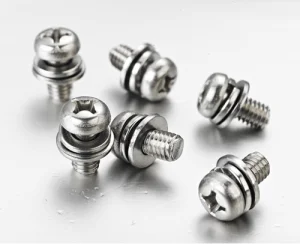
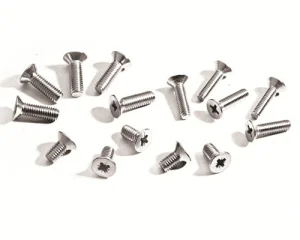
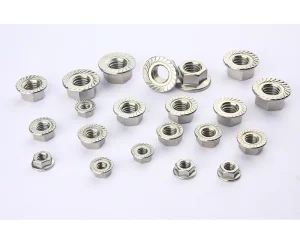
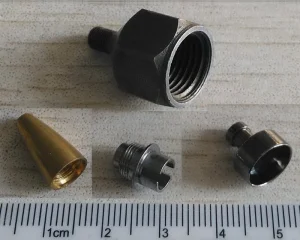
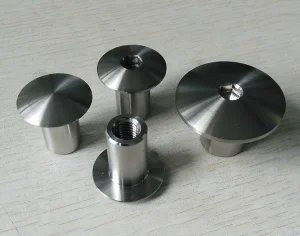
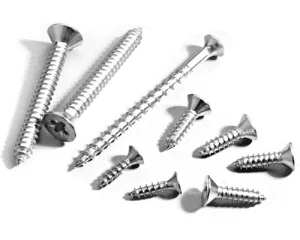
In the expansive world of industrial fastening, the Philips head screw remains a quintessential component. Despite the evolution of Torx and Hex drives, the Philips head configuration—originally designed to facilitate the "cam-out" mechanism—continues to be the preferred choice for consumer electronics, furniture manufacturing, and automotive interiors due to its ubiquity and ease of use in manual assembly lines.
As a leading China Stainless Philips Head Screw Manufacturer, Ningbo Krui Hardware Product Co., Ltd. understands that a screw is not merely a piece of metal. It is a critical structural element. Whether it's 304 austenitic stainless steel for general corrosion resistance or 316 grade for marine and chemical environments, our manufacturing processes prioritize metallurgical integrity, thread precision, and head geometry.
The "China Advantage" in fastener manufacturing is often misconstrued as purely cost-driven. In reality, it is an ecosystem advantage. The manufacturing clusters in Ningbo integrate:
At Ningbo Krui, our authority is built on adherence to international standards (DIN, ISO, ANSI). We do not simply "make screws." We provide engineering solutions. A stainless steel Philips screw must balance the ductility of the metal with the hardness required to prevent strip-out. Our R&D department meticulously manages the thread rolling process to ensure that the stress distribution across the fastener thread is uniform, maximizing the pull-out strength in various substrates—from thermoplastics to hardwood and industrial aluminum profiles.
Using 316L stainless steel to prevent crevice corrosion in salt-heavy environments.
Aesthetic, corrosion-resistant, and high-torque Philips screws for flat-pack and premium furniture.
Mounting hardware for solar panels requiring durability against extreme weather fluctuations.
For international buyers sourcing from China, the evaluation process should go beyond price. Look for:
Ningbo Krui Hardware Product Co., Ltd. embodies this transparency. Since 2004, we have shifted from basic manufacturing to providing comprehensive OEM solutions for non-standard metal components, ensuring our clients receive a product that is perfectly calibrated for their specific engineering requirements.
304 is the standard grade for most environments, offering great resistance to corrosion. 316 contains molybdenum, which significantly increases resistance to pitting and crevice corrosion, making it essential for marine or chemical plant environments.
The efficiency of a direct factory like Ningbo Krui allows for custom-engineered specifications that distributors cannot offer. You get faster iteration for custom parts, lower costs for high-volume orders, and total quality control oversight.
It comes down to precision. A well-manufactured Philips head must have deep enough flutes and precise angles that match the standard driver bit. Our thread rolling process is optimized to ensure the head remains intact under standard torque ratings.
 Krui Hardware